
Urban spaces for young people
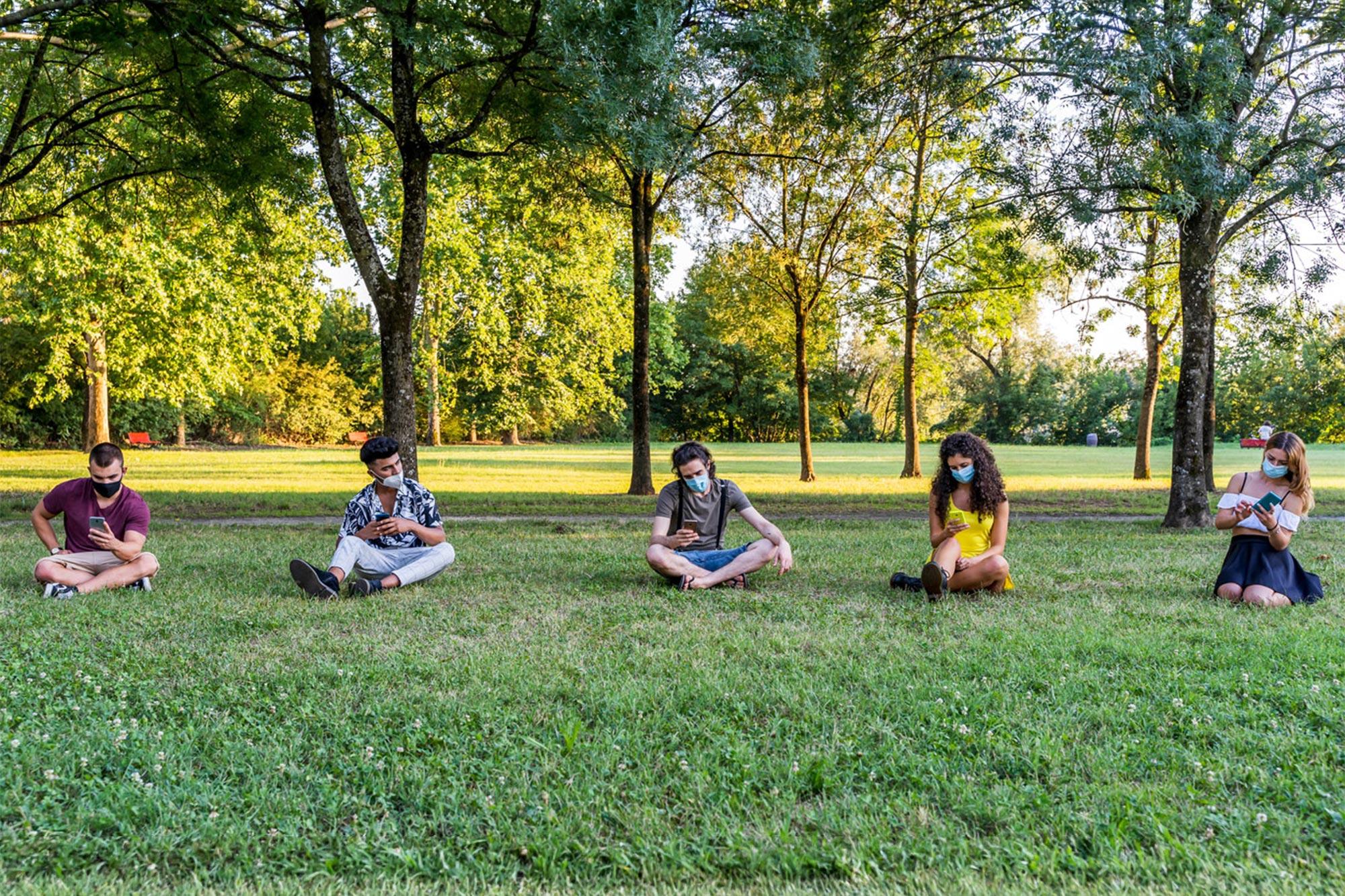
Young people’s resilience during a pandemic is strongly dependent on access to urban spaces and social participation. Urban planning, youth work and schools can reinforce these very conditions.
- Project description (completed research project)
The Covid-19 pandemic profoundly changed young people’s everyday lives. Schools, youth meetings, sports facilities, cafés and many other places were temporarily closed or only available with restrictions. The project examined the role that urban and publicly accessible spaces played for young people during the pandemic and what can be learned from this for youth-friendly, resilient urban development.
The researchers worked closely with young people as well as urban development stakeholders, facilitating an in-depth engagement with the requirements of sustainable urban development.
- Background
For young people, the pandemic had a particularly drastic impact because they rely on places outside the family as they mature. They need spaces to meet friends, to retreat to, to try new things, to be independent, and to experience a sense of belonging. At the same time, young people in public spaces – particularly as portrayed in the media – were perceived as disruptive or irresponsible and were subject to greater scrutiny.
- Aim
The project examined how young people in Zurich experienced the pandemic, which spaces were important to them and how they dealt with the restrictions. It focused on the question of which spatial conditions helped them to cope with everyday life, maintain social contact and remain able to act. The goal was, among other aspects, to provide practical knowledge for urban planning, youth work, schools, administration and politics.
- Results
The results show that pandemic resilience among young people is not simply an individual skill: it depends heavily on social, spatial, and institutional conditions.
Accessible public spaces constitute an important part of social infrastructure for young people. Places where young people could meet, be active or simply take some time out were particularly important during the pandemic. They enabled social interaction and a certain degree of independence.
Young people dealt with the restrictions in different ways. While some experienced hardly any changes, others hoped for a return to normality or discovered new activities. A smaller group did not follow the rules and continued to meet in public places.
Young people’s ability to act was heavily shaped by their life situation. How young people experienced the pandemic and what scope they had to cope with the restrictions depended heavily on their living situation, family circumstances, other resources and their integration into society. For example, those young people who attracted attention due to disregarding rules were predominantly those living in cramped conditions or in stressful situations.
- Relevance for research and practice
The results expand our understanding of resilience: young people cope better with crises when their social and spatial needs are taken into account, making public and semi-public spaces a central piece of social infrastructure, especially in times of crisis. For urban planning and local development, this means maintaining and further developing a dense network of easily accessible places that can be used in a variety of ways. Spaces should be designed and managed in such a way that young people can use them safely and independently. Early involvement is important for this: their perspectives should be incorporated into planning processes, the design of public spaces, and crisis prevention. Youth work and schools can play an important role as mediators here.
- Original title
Pandemic-resilient Spaces for Sustainable Cities - Urban Places for the Pandemic Resilience of Young People. A transformative research project.
- Publications
The publications of the project can be found in the SNSF Data Portal.