Religion and social responsibility
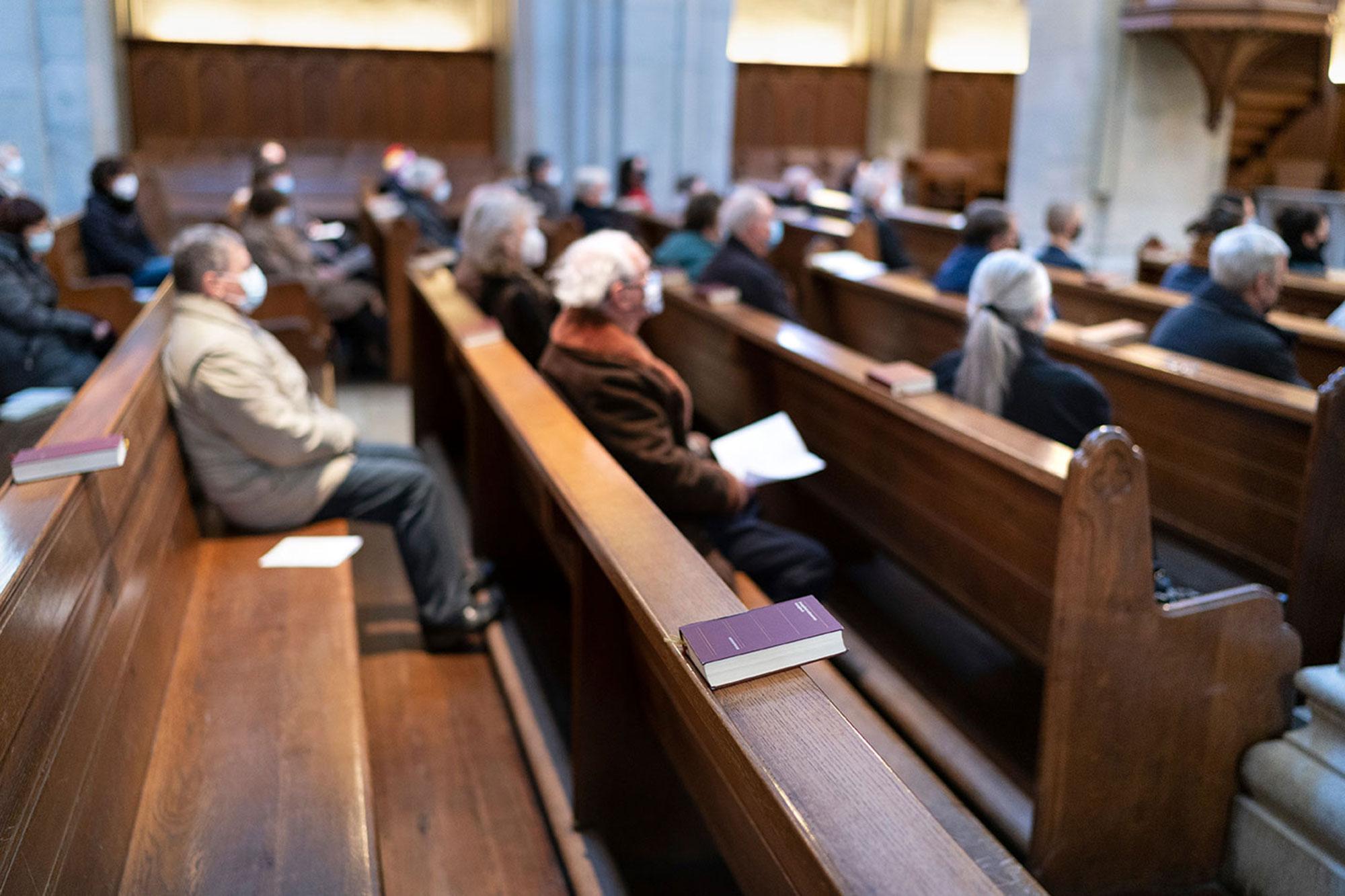
How did people decide what counted as responsible behavior during the Covid-19 pandemic? The project examined how underlying worldviews shaped perceptions of risk, solidarity, and authority, and how these guided people’s decision-making.
Project description (completed research project)
The project examined how people in Switzerland answer fundamental questions about life, such as whether higher powers exist, what constitutes the right course of action, and what pathways lead to a better future. The researchers explored how these underlying beliefs shaped people’s health-related choices during the Covid-19 pandemic, including attitudes towards measures such as physical distancing, face masks and vaccination. To investigate these questions, the team collected testimonies from people with diverse social and religious backgrounds, ranging from committed members of various religious communities and convinced atheists to alternative practitioners and individuals for whom religion or spirituality played only a limited role in everyday life.
Background
Switzerland’s religious landscape is becoming increasingly diverse, while many people are indifferent or critical to traditional forms of religion. Yet, individuals still have general ideas about how the world works, what constitutes a “good life,” and how people should act within society. The Covid-19 pandemic provided a unique opportunity to study how these religious or secular worldviews shape individual attitudes towards responsibility, trust, solidarity and authority in times of crisis.
Aim
During the pandemic, people faced major disruptions to daily life, multiple and potentially conflicting information, and growing pressure to follow specific behaviors. This project examined how worldviews shaped interpretations of uncertainty, risk assessments, health-related decisions, and strategies for adapting to exceptional circumstances. It explored why people complied with or resisted public health measures and how these responses reflected different ideas of a healthy life and society.
Results
Shared beliefs, divergent views: People with the same religious or non-religious affiliation often interpreted the pandemic differently. Attitudes of compliance and non-compliance are rather outcomes of personal worldviews.
Reinterpreting rules: People did not simply comply with or reject measures, but reinterpreted rules to align them with their own values. For example, they developed creative ways to reconcile vaccination with their beliefs and sense of identity.
Recognition and social ties: People sought support and recognition for their position. Protest movements offered support bringing together people who valued being different from dominant social expectations. As individual worldviews are also shaped by social relationships, individuals adapted their views or distanced themselves from their social environment.
Types of worldviews: Worldviews are often shaped through opposition. People tended to trust sources aligned with their values and distrust others. The researchers identified three worldview types that cut across (non-)religious affiliations: a hierarchical type that supports institutional rules and social order; an enclavist type that favours egalitarian ideals and resists top-down intervention; and an eclectic fatalist type that retreats into a more isolated way of life.
Relevance for research and practice
The findings challenge the assumption that religious or non-religious identities determine compliance or non-compliance. Instead, they show how people draw on their worldviews to adapt creatively in times of crisis. Responsible behaviour cannot be simply equated with compliance with officially mandated measures. Rather, it is shaped through social relationships, narratives and practices that help people to cope with uncertainty. These processes influence whether rules are seen as meaningful, reasonable or binding. Public policy might benefit from a critical reflection on the concept of responsible behaviour looking beyond acts of non-compliance and addressing the underlying sense of lost social order, meaning, and agency that many people experience in times of crisis.
Original title
How Worldviews Shape Social Responsibility: Religious and Secular Narratives of the Body, the Virus, and the State in the Covid-19 Crisis
Publications
The publications of the project can be found in the SNSF Data Portal.