
Data during a pandemic (PANDA)
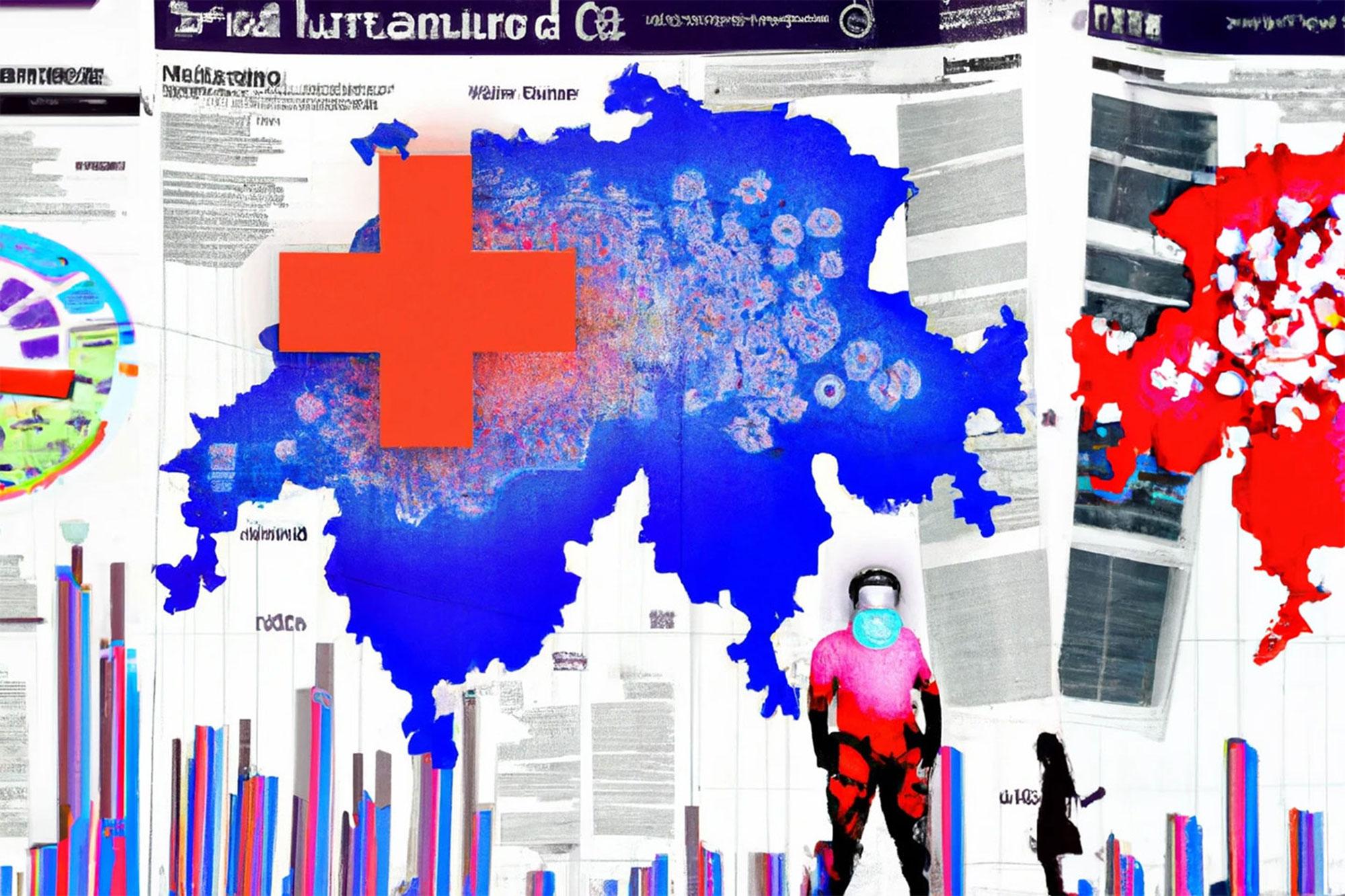
During Covid-19, data shaped our daily lives – but were they understood ? The project examines how pandemic figures were produced, reported and interpreted, offering insights to better navigate the next crisis.
Project description (completed research project)
During the Covid-19 pandemic, data became central to public life. Figures were published daily, discussed by journalists and followed by millions of citizens. Yet data are not neutral reflections of reality: they depend on definitions, collection procedures, institutional choices and publication formats. Having access to data is therefore not enough: they must also be understandable, well documented and contextualized.
The project studied the full communication chain of pandemic data, combining several methods: analysis of Covid-19 articles from five French-speaking Swiss media outlets, interviews with journalists and institutional actors, a survey on how audiences interpret data visualizations, and the design of two interactive tools aimed at improving the reading of data-driven news.
Background
The Covid-19 pandemic was one of the first major global health crises to unfold so visibly through real-time data. Indicators such as cases, deaths, hospitalisations and reproduction rates did not only describe the situation: they contributed to framing it and governing it. The pandemic also exposed tensions in how data are produced and communicated. For many citizens, journalists and decision-makers, the challenge was not finding information, but making sense of it.
Aim
The project sought to identify which data and visual formats structured media coverage, how journalists related to official data sources, how audiences intepreted data vizualizations and how interactive reading formats could improve understanding without undermining credibility. The broader goal was to provide institutions in charge of pandemic management with pratical perspectives for better data communication in future health crises.
Results
Neglected dimensions. The project shows that health indicators such as case counts and deaths dominated media coverage of the pandemic, leaving its social, psychological and economic dimensions comparatively overlooked.
Data dependence. Media relied on institutional sources for 65% of references. This dependence varied across journalist profiles: some accepted it, others recognised its limits without being able to overcome them, while specialist journalists cross-checked data with expert opinions and alternative sources.
Key competencies. Access to data does not guarantee understanding. Interpreting charts depends on audience skills, and complex visualizations reduce engagement. The research group showed that progressive disclosure — the key message first, methodological details second — better supports understanding.
Assistive tools. The project also tested two interactive tools designed to improve the reading experience and increase audience engagement. One of them, a conversational AI assistant, raised questions about credibility, bias and over-reliance on AI-generated content.
Relevance for research and practice
The project's main practical implication is that effective crisis data communication cannot be reduced to publishing more or better data. It depends on the conditions under which data are produced, shared, visualized and interpreted. These conditions must be prepared before a crisis begins.
For public institutions, this means investing in open, structured, documented and stable data infrastructures. In preparation of a pandemic, it also means broadening crisis monitoring beyond epidemiological indicators to include social, psychological and economic effects.
For audiences and the public, the results underline that data literacy is a collective responsibility, not only an individual one. Journalists should be supported to work more critically with data, through training, collaborations and shared routines.
Original title
Harnessing the potential of data visualization and narratives produced by media and public actors in times of pandemic or health crisis
Publications
The publications of the project can be found in the SNSF Data Portal.