
Challenging the relative invisibility of urban essential workers
Essential workers kept Swiss cities running during the Covid 19 pandemic. A digital platform gives them a voice and offers an insight into their daily lives, the challenges they face and the issues that matter to them.
During the Covid-19 pandemic, urban essential workers proved indispensable to the functioning of Swiss cities, yet their work remained systematically undervalued. The NRP 80 research project 'Urban essential workers' retrospectively examined the experiences, challenges and policy demands of non-healthcare urban essential workers during the pandemic in Zurich. The researchers interviewed people working in domestic service, nurseries, the retail sector and public transport. In the process, they collected material from the interviewees, such as photographs or videos, which served as a valuable supplement to the interview notes.
Based on these findings, the research group launched the website ‘System Relevant! – Who keeps the city running?’ (system-relevant.ch). This digital platform invites users to explore the lives of ‘everyday heroes’. Through topics such as housing, work and leisure, they can gain insights into different ways of life. The platform immerses the user in the daily lives of the heroes by recreating conversations they might have had with their loved ones, friends or colleagues on a messaging app.
The platform sheds light on the living and working conditions of urban essential workers and highlights the challenges and inequalities they faced before, during and after the pandemic. Carole Ammann, a member of the research team, explains the ideas and reflections behind the development of the platform.
Carole Ammann, what do you see as the main contribution of this platform?
The digital platform aims to make the everyday realities of urban essential workers more visible. The displayed conversations provide insight into both their working conditions and their daily lives. These domains are often difficult to access and remain underrepresented in public discourse. By highlighting these perspectives, our research group would like to challenge the relative invisibility of this workforce.
We think the website is relevant for a range of stakeholders, including trade unions, policy-makers, employers' organisations and NGOs. In addition, its format makes it well suited for use in teaching, both at the secondary and tertiary levels, where it can serve as a resource for engaging with questions of work, care and support, and urban life from various perspectives.
Why did you choose to reproduce chats between everyday heroes and their families or friends?
The decision to reproduce chat-based dialogues emerged directly from our engagement with the empirical material. As we analysed the interviews and accompanying visual data, it became apparent that the chat format offered a particularly effective way of conveying the interplay between professional and private spheres. For each occupational group, we identified central themes and developed at least one fictional dialogue that reflected these.
How exactly did you go about creating these fictional chats?
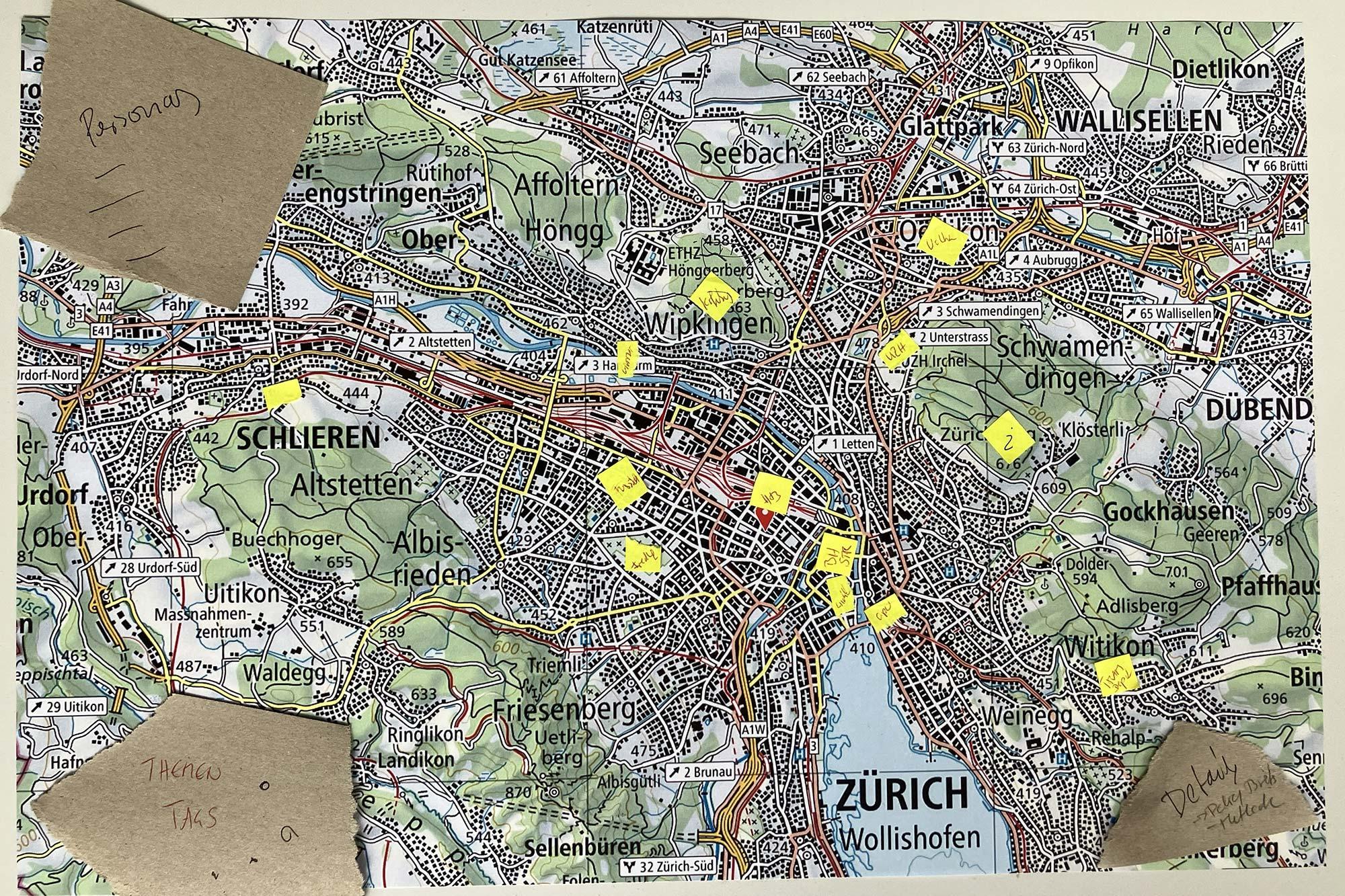
In a series of workshops, we worked with everyday heroes to outline various implementation concepts. It soon became clear that the four occupational groups we were investigating were well suited to a storytelling approach. We therefore decided to create a persona profile for each group, summarising recurring themes and experiences from the interviews. This approach enabled us to develop representative narratives whilst ensuring the anonymity of our research participants. Since many of the conversations with everyday heroes were conducted as walking interviews, the respective locations proved to be a key analytical dimension. This gave rise to the idea of an interactive map through which users can explore specific places in the city of Zurich that featured in the narratives.
Can you elaborate on the collaboration with mLAB – an experimental space at the University of Bern – on this website?
The collaboration with mLAB was already envisaged in the project plan and formed a central component of our knowledge transfer strategy. From the outset, it was important to us that our research findings would be accessible beyond academia and engage a broader public audience.