
Swiss pandemic governance
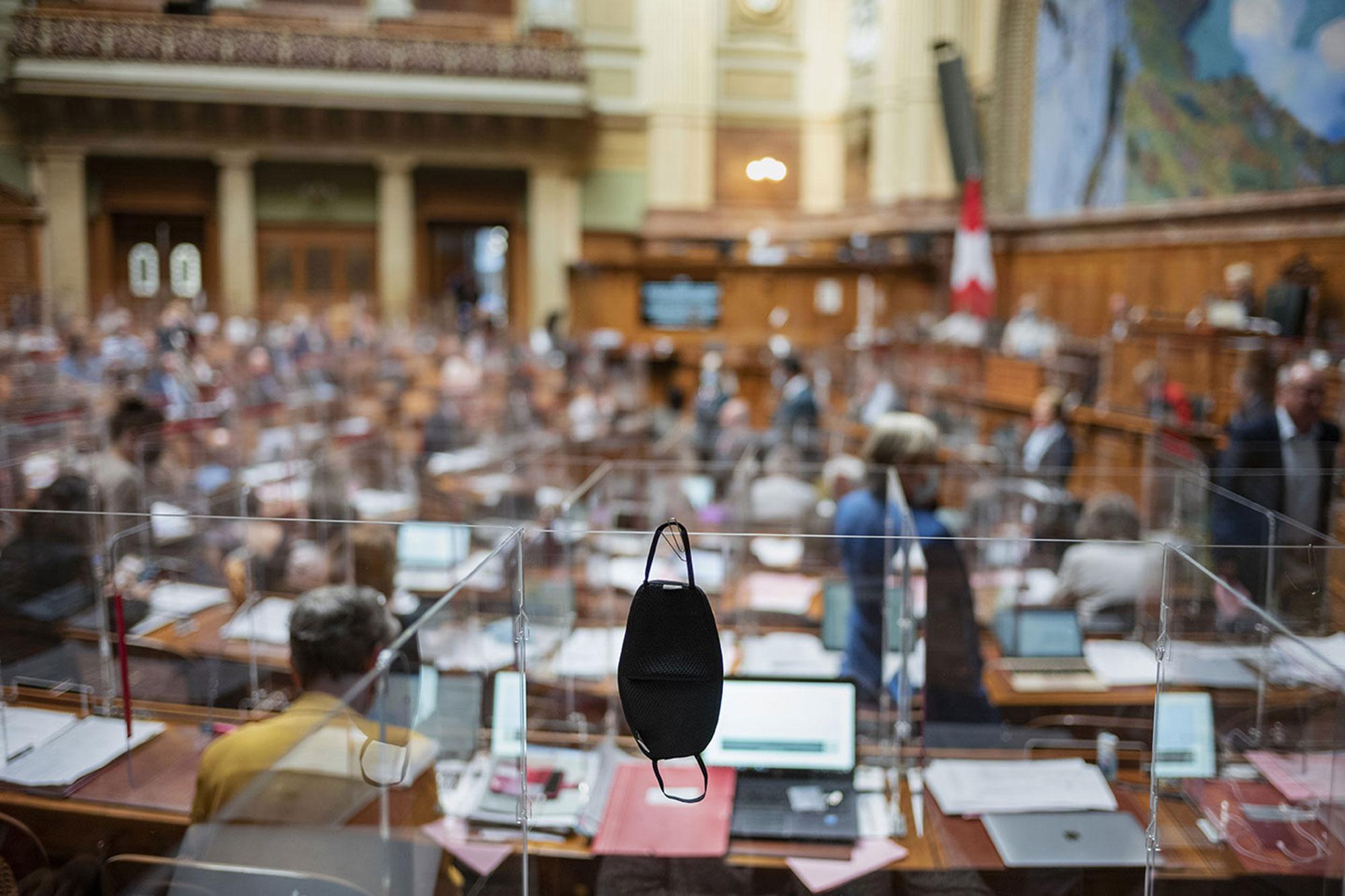
The Covid-19 pandemic tested Switzerland’s approach to pandemic governance. The project shows how Switzerland can retain its ability to act in crises while simultaneously protecting democracy, human rights, and federalism.
Project description (Completed research project)
Crises pose particular challenges to established government responsibilities and processes. State actors need to act quickly and continuously adapt their efforts to accommodate new developments and insights. The researchers examined how the efficiency and legitimacy of crisis governance in Switzerland can be strengthened, with a focus on democratic participation, the separation of powers and checks & balances, the adaptability of federal structures as well as the protection and the implementation of human rights. The goal was to strengthen the resilience of existing and new institutions and to hone processes so that future crises can be managed effectively and with democratic legitimacy.
Background
The Covid-19 pandemic showed that Switzerland was not sufficiently prepared for a long-term crisis – despite its pre-existing legal bases. Although the constitution and the Epidemics Act (EpidA) regulated the fundamental responsibilities, various uncertainties and gaps in the system became apparent during the pandemic. The federal government, cantons and municipalities had to act under great time pressure, while democratic procedures and fundamental rights came under significant strain.
Aim
The project examined how the constitutional, legal and institutional frameworks of crisis management can be improved with the aim of strengthening the Swiss legal system such that:
- Crises can be managed as far as possible on the basis of ordinary law;
- Sovereign powers remain clearly regulated, limited and controlled;
- Confederation, cantons and communes collaborate effectively and in a coordinated manner;
- Basic rights and human rights are still upheld in times of crisis.
Results
The findings highlight the need for Switzerland to strengthen its crisis preparedness and management from a legal perspective.
Clear legal bases: crises can be managed more efficiently and with greater legal certainty if responsibilities and procedures are clearly defined in advance. The legal system should be designed in such a way that crises can be avoided or managed as far as possible with ordinary law.
Safeguarding democracy and control: parliaments and cantons need functioning rights of participation and control – even when the executive branch has to act quickly.
Systematic consideration of fundamental rights: the impact on any groups particularly heavily affected must be examined before decisions are made and addressed after the crisis.
Improve federal cooperation: the federal government and cantons should act in a coordinated manner during crises, with clearly defined roles and reliable communication channels.
Relevance for research and practice
The research results were translated into tangible recommendations for constitutional drafting, legislation, administration and justice and discussed with these stakeholders. The central guiding principles include:
- Proposals for a constitutional revision;
- The strengthening of the legal bases in times of crisis;
- The safeguarding of legal oversight;
- The continuation of federalism and the participation of the cantons in crisis situations;
- The judicial review of emergency regulations;
- The consideration of the impact on fundamental and human rights;
- The review of crisis measures;
- Appropriate reparation measures in cases of serious violations of fundamental rights.
Original title
Improving Swiss Pandemic Governance – How to Strengthen Democracy, Federalism and Human Rights Implementation in Times of Crisis
Publications
The publications of the project can be found in the SNSF Data Portal.