
The Covid-19 pandemic significantly impacted vocational education and training
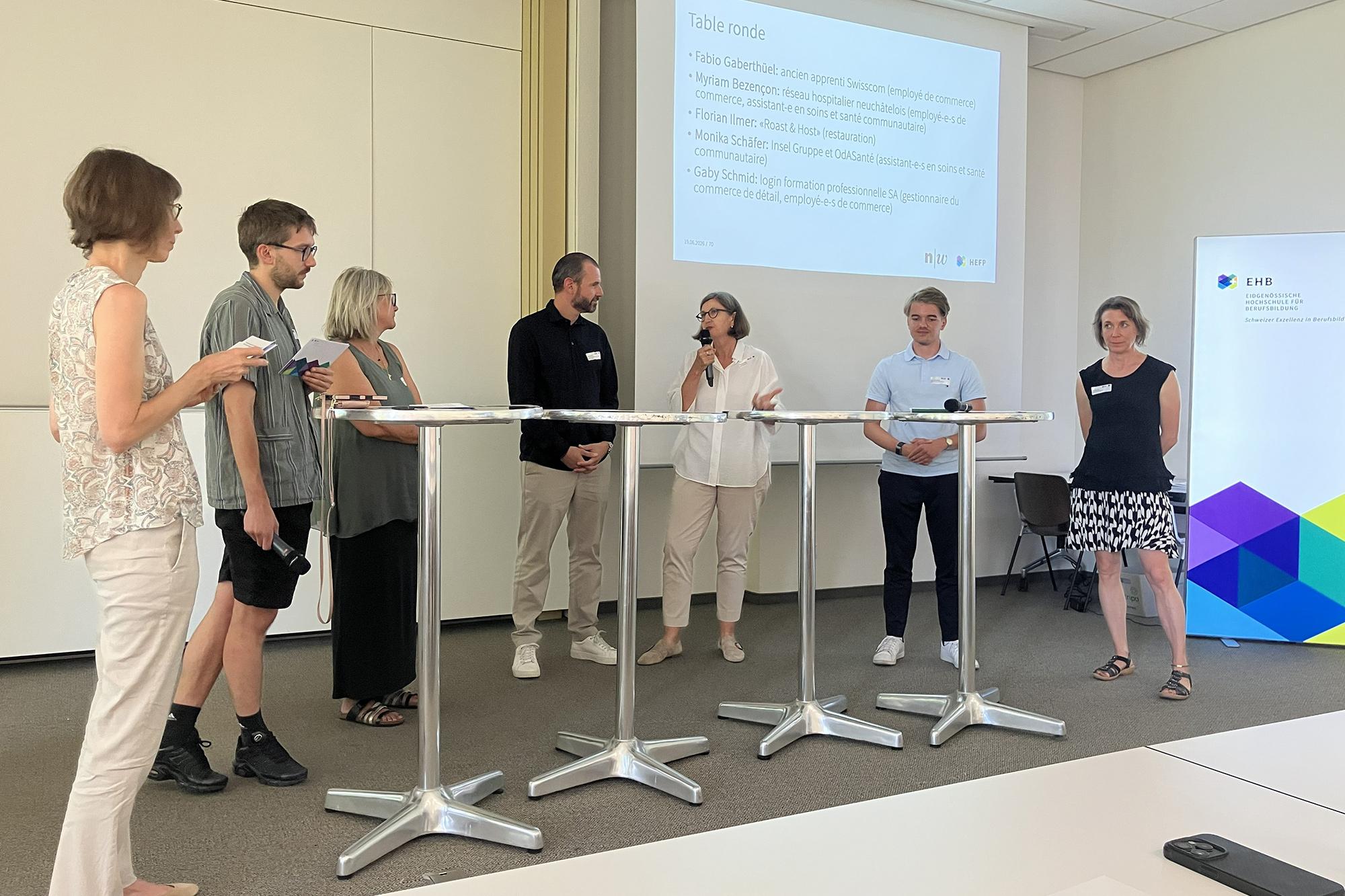
Around sixty people took part in the closing conference of the project ‘Effects of Covid-19 on VET’. The conference highlighted how the Covid-19 pandemic has spurred innovation in vocational training.
Sixty participants from the fields of vocational education and training, education administration and research attended the closing conference of the NRP 80 project ‘Effects of Covid-19 on VET’ on 19 June 2026 at the Swiss Federal University for Vocational Education and Training in Zollikofen. Under the title ‘Crisis as a catalyst for innovation? Dual vocational education and training after Covid-19', the findings of the research project and the Swiss National Science Foundation (SNF) project ‘Occupational health: shortcomings in the professional socialisation of apprentices’ were presented. During a panel discussion and in light of the research findings presented, experts in dual basic vocational training reflected on the COVID-19 pandemic and shared their experiences in dealing with the pandemic and potential future crises.
Vocational training has become more digital
For several participants in the panel discussion, digitalisation is the most significant change brought about by the Covid-19 pandemic in vocational education and training. Fabio Gaberthüel, who completed a business apprenticeship at Swisscom in 2020, opened the discussion: ‘Working from home has helped me to become more independent and knowing that I could turn to my local team at any time gave me a sense of security’, he said. However, digitalisation has had an impact not only on learners but also on trainers. Gaby Schmid, Head of Training at login Berufsbildung’s Zurich site, is convinced that ‘the crisis has enabled us to develop our digital skills, which is having a positive effect on our current processes’.
The restaurant industry is breaking new ground
‘In the restaurant industry, we missed the digitalisation trend during the pandemic for understandable reasons’, explained Florian Ilmer, co-owner of a restaurant in the canton of Zurich. ‘Immediately after the pandemic, we didn’t have the time, as we were busy with the return to normality and had a lot of work and customer enquiries’, he added. However, the pandemic inspired him to break new ground and, in 2024, to set up the ‘Roast and Host’ training network together with like-minded people, which he now heads. This network enables young people to complete their two- or three-year apprenticeship across six different establishments, allowing them to experience the diversity of the sector. The network supports participating businesses by providing young people with high-quality training. The training partnership has got off to a successful start and is set to be established in further cantons.
Education comes first
In the healthcare sector, the challenges posed by the pandemic were different. Healthcare facilities were on the verge of becoming overwhelmed and were facing high levels of staff absence due to the pandemic. ‘We had to assign more tasks and responsibilities to our business and logistics apprentices - such as delivering supplies to staff and patients - fortunately only for a short time’, explained Myriam Bezençon, coordinator at the Réseau hospitalier neuchâtelois. At the Insel Group in Bern, ‘we have managed to prioritise the training and skills-based deployment of healthcare apprentices even during the pandemic’, reported Monika Schäfer, Head of Training and Professional Development for Healthcare Professions within the Insel Group’s ‘Direktion Pflege’ and a member of the Executive Board of OdASanté, the national umbrella organisation for healthcare sector employees. ‘The challenges in hospital care continued even after the pandemic’, she added. ‘The hospital had to clear the backlog of non-urgent procedures. At the same time, many staff wanted to plan longer holidays and make up for overtime. The apprentices were under considerable pressure to cope with the rapidly changing circumstances’. To support apprentices on their path to becoming qualified healthcare professionals, the Insel Group launched the ‘strong@work’ programme in 2022, which is specifically dedicated to the mental health of apprentices.
Building a robust support system
The work of the NRP 80 research group ‘Effects of Covid-19 on VET’ confirms these observations from the field. ‘Our findings show that, whilst the dual vocational training system has generally weathered the crisis well, the experiences of apprentices and companies varied greatly depending on how the pandemic affected the workload in different occupations’, explains Irene Kriesi, co-project leader and professor at the Swiss Federal University for Vocational Education and Training. The researchers emphasise how important it is to provide learners with reliable support during the crisis. This support must prioritise learners’ continued participation in their education, as well as their health, concludes David Glauser, co-project leader and professor at the FHNW School of Education.